ΠΛΑΙΣΙΟΘΕΤΗΣΗ
CONTEXTUALISATION
Tangata Whenua, Tangata Te Tiriti, Tangata Moana
The People of the Land, The People of The Treaty, The People of The Pacific
Working within an Aotearoa-New Zealand context I am regularly working with dance-artists from many and diverse cultural backgrounds. Often the artists do not identify solely one thing or another, and regularly their creative works explore these complex cultural identities, essentially, the question of what it means to be a New Zealander in this era.
Many of the funding bodies, programmers and institutions are interested in works that investigate the idea of New Zealand identity, however, there is often an expectation for the artist to choose one identity over another, even when this may not feel accurate to them. We must consider what is lost when we mask one cultural identity in order to highlight another. Artists are also often asked to identify with a wider grouping; either Asian, Māori/Pasifika, African or European. Likewise, we must examine the effects of blending the many and unique cultures in order to create a ‘block’? How can artists meaningfully investigate often nuanced and complicated spaces, when they are asked to fit into pre-approved and vetted categories, forms and ideas? Does the art-making then become an exercise in maintenance, rather than genuine and curious exploration? Artists' final products can in effect, be the result of the proposals and applications submitted, (often designed to align with an institution's objectives) rather than a true reflection of their original intentions. The work then may already be compromised before it has begun, because there is no space to hold the many selves, the many cultural (or otherwise) identities that are truly present.
According to Stats NZ, Aotearoa-New Zealand is experiencing rapid ethnic diversification, there is an increase in Māori, Pacifika, and Asian ethnic populations. I see this reflected by the dance students I interact with, and the dance-artists working within the industry.
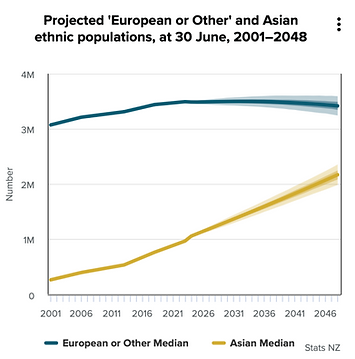

We continue to employ Western European training and choreographic approaches in Aotearoa-New Zealand even though a significant and increasing number of practitioners do not identify, feel reflected or supported by these. What are the effects of re-imposing, and re-overlaying cultural standards that do not speak for or to the many practitioners? By preferring one set of 'norms’ over the others, the industry re-enforces a Western European cultural dominance that extinguishes the many other extant voices .
Renewed approaches to making, thinking about and presenting work that reflects and empowers the culturally complex and multitudinous must surely be given serious space.
We are not fixed and static entities; our curiosity and journeys may lead us to investigate and discover previously unknown lineages and identifications. The opportunity for this evolution must always be open and encouraged. Recently, a dancer who identified primarily as Māori, contacted me after learning about his own Greek heritage. He had learnt of this research and my own identity (being Greek, and married into a Māori family/whānau, with a Greek-Māori son) and wanted to have a conversation about holding and honouring both spaces. The desire to discover new identities does not mute or lessen one’s sense of self, both can exist in parallel, side by side. Not one or the other, but both. Or many.
When we motivate others to recognise all the complex, rich, messy and multitudinous parts of ourselves, we create a richer, more responsible (and responsive), engaged creative industry.
…BODY SOVEREIGNTY IS A PRIVELAGE THAT REQUIRES UTILISING OUR POSITIONS TO ADVOCATE FOR THOSE WHO DO NOT, MEANING ALL BODIES (COLE, 2017)”
– GILLON, 2020
“